Sunday, 17 February 2019

Anandi Gopal

आनंदी गोपाळ
PC: Google Images

निशब्द!... काही अनुभव असतात असे, निशब्द करणारे. त्यातलाच एक म्हणजे "आनंदी गोपाळ"- विलक्षण अशा एका जोडप्याची कथा- जी आपल्याला भारावून टाकते आणि विचार करायला लावते- काय असतं या लोकांमध्ये जे पुढचा विचार करतात, माणसांच्या विचारांना बदलवतात, प्रवाहाच्या विरुद्ध जातात, क्रांती आणतात- असं काहीतरी करून दाखवतात जे पहिले कोणी केलेलं नसतं, ते घडलेलं नसतं!

हाडामासाची माणसं- तुमच्या आमच्यासारखी, त्यांना वेगळं बनवतं तर त्यांचा जिग्गर- कोणत्याही दिव्याला सामोरे जाण्याची तयारी, कशाचीही परवाह ना करता, आपला  comfort zone सोडून, तो निर्धार आणि त्याला न्याय देण्याची चिकाटी आणि अट्टहास! त्यांनी त्यांचा प्रण जपला, सगळ्यांच्या पलीकडे, स्वतःचाही, आणि स्वतःचा अंशनि अंश समर्पित केला त्या एका कार्यासाठी! आणि म्हणूनच त्यांचे नावं इतिहासात अजरामर आहे.

पण असे वागणे, जे बरोबर ते बरोबर आणि जे चूक ते चूक, हे सहज का नसावे, आज सुद्धा?
कळत, नकळत, समाजाच्या रचलेल्या व्यवस्थेला- मग ती चुकीचे असली तरी, प्रश्न विचारता आपण मान्य करतो, ग्रांटेड घेतो. कदाचित, चूक- बरोबर, हे असंच असावं, हे समाजाने सांगण्याची गरज नाहीच आहे, परमेश्वराने प्रत्येकाला ती समज दिली आहे. बहुतेकदा, आपण accept करायला कचरतो, कारण नकळत, त्या खोकल्या विचारांनी, भीतीने आपल्या मनात घर केलेला असतं.

"लोकं काय म्हणतील?"- या विचारांनी कित्येक स्वप्नांचा बली घेतलेला असावा. पण यांनी ते करून दाखवलं- अडचणींवर, आव्हानांवर मात करत. त्या काळात जेव्हा असं करणे तर दूर, असं स्वप्न बघायचीही मुभा नव्हती.
गोपाळराव- ज्यांनी आनंदीबाईंना हे स्वप्न बघायचं बळ दिलं. समाजाच्या  बुरसटलेल्या विचारांचा कणा मोडण्यासाठी थोडा विक्षिप्तपणा गरजेचं होता, जो गोपाळरावांकडे होता. कधी कधी आव्हानं घेणं सोपं असतं, स्वप्न बघणंही, पण त्यासाठी लागणारं धारिष्ट्य, सामर्थ्य, कसरत, नेमकेपणा आणि जिद्द हे जास्त गरजेचं आणि महत्वाचं असतं. ते गोपाळरावांनी केलं- घरच्या कामांपासून ते समाजाचा तिरस्कार, अवहेलने झेलणं आणि त्याने कमजोर पडता लढत राहणं, शेवट पर्यंत. त्यांच्या शिक्षणासाठी फिरले- कल्याण, ठाणे, कोल्हापूर, कोलकाता आणि मग अमेरिका! खूप प्रयत्नानंतरही ते आनंदीबाई बरोबर अमेरिकेला जाऊ शकत नव्हते, म्हणून तिला एकटीला पाठवले. आनंदीबाईंची तयारी बघता, जेव्हा त्यांनाही त्यांच्या धाडसाचे कुतूहल वाटले तेव्हा आनंदीबाई बोलल्या, "स्वप्न एवढं मोठं आहे, तर धाडसही मोठं ठेवायला पाहिजे ना." इथून आपण शिकलं पाहिजे.

१६ वर्ष्यांचे असताना त्या अमेरिकेला गेल्या Woman's Medical College of Pennsylvania मध्ये वैदकीय शिक्षण घेतले- भारतातल्या पहिल्या, तिथे शिक्षण घेणाऱ्या. १८८६ मध्ये त्या MD झाल्या- भारतातील पहिल्या महिला डॉक्टर! कोल्हापूर मधल्या अल्बर्ट हार्वर्ड हॉस्पिटल मध्ये त्या महिला वॉर्डच्या  physician-in-charge झाल्या. पण दूर्देवी, वयाच्या २१ व्य वर्षीच टीबीमुळे त्यांचे निधन झाले.
आज, शुक्र ग्रहावरच्या एका crater ला त्यांचं नाव देण्यात आले आहे.

वैयक्तिक दुःख, डोंगराएवढे आव्हानंही त्यांचा ध्यास मोडू शकली नाही. त्यांची हिम्मत, निष्ठा पाहून सर्व काही ठेंगे वाटते. आणि एवढ्या कालांतरानेही त्या रूढी परंपरा, स्त्री हक्कांसाठीचा संघर्ष बघून मन हैरान होते, तर आपल्यातील संकीर्ण विचारांची, शंका- कुशंकेची आणि लाचारेची लाज वाटते. आज सर्व काही सुविधा असताना, जेव्ह आपण हार मानतो, स्वतःवर भरोसा वाटत नाही, तेव्हा त्यांचे उदाहरण डोळ्यासमोर ठेवायला हवे.

म्हणतात, एका यशस्वी पुरुषामागे एक स्त्री असते, पण आनंदीबाई, सावित्रीबाई फुले, रमाबाई रानाडे- यांच्या कथा जाणल्यावर लक्षात येते कि "एका यशस्वी स्त्री मागेही एक पुरुष होता!"


© प्रियांका सरोदे

Thursday, 24 May 2018

Entering the bubble

PC: Google Images (RighterTrack)
Bubbles- we all created them when young, with soap- multicoloured, floating, bouncy, they looked fascinating! Aren’t we all living in bubbles within our own lives, thoughts? We all are in some bubble or the other separated by space and time. And we enter and exit different bubbles in a single day; some significant ones in life when our life undergoes some significant transition. This could be relocation, marriage, or a major shift. Take a day-to-day example. You get up in the morning and especially if it’s a Monday, you have to drag yourself out! You don’t feel like leaving your house (your bubble). Transitions are the most challenging- leaving one bubble and entering the other. You come to office and settle in your desk, which is a bubble in itself and as time passes, you get comfortable in it.
We all live in a variety of bubbles- routine bubble (doing routine tasks), then the most interesting- the imaginative/ creative bubble (where you dream, think of things you like, plan your vacation etc.), the casual bubble- chatting, discussing with peers (social bubbles), watching a movie, entertainment and enjoying’. (Some bubbles you don’t need an effort to move into :D) ‘The lonely bubble’- you are by yourself, thinking all kinds of stuff that others cannot hear, secretive, you don’t want to be disturbed until you transcend to another bubble. Then, there is this scariest one- ‘the ignorance bubble’- you need to get out of it! You are definitely affected by the bubble you are into- like if things are positive around, you take life in good light, while in a negative bubble, things are upsetting!
It is life’s funda- keep moving or it will become stagnant- the more bubbles you explore- the more enriching your life is. Once you’re used to it and get a knack of it, you no longer want to cling to your ‘comfort zone bubble’.
Isn’t it wonderful how we transcend from one state to another, without even knowing it consciously and living through it day in and day out- enriching lives, tracing journeys, moving on in life.
Having said that, I feel there are so many bubbles we haven’t gotten into and are thus deprived of its experience. The point I am trying to make is we need to explore the other bubbles (many times we think of trying out new things, but are stopped by our apprehensions) that we don’t know- you never know what you could discover.
The idea struck, when I read about James Grant who writes under pseudonym Lee Child. He had almost hit the bottom when 40 and lost his job in Granada Studios. He chose a challenging path but rather a satisfying one for him- of writing. So far, he has published 22 thriller books, with 23rd in the finishing process. All this when he had zero experience in writing, but created his own world, his creative bubble!
In my recent interview with Shatrujeet Nath, author of bestselling mytho-fantasy, The Vikramaditya series, he said, you will never know if you are good at a particular thing, unless you try. To elaborate on it, to excel, you first need to get exposed, i.e. “enter the bubble!”
Nelson Mandela said, “It always seems impossible unless it’s done.” Have you thought about it? There have been instances in your life- when taking up a new degree, a job, a challenging target or deal…you had apprehensions, you thought it to be impossible, difficult; but then you had no choice but to try and work on it and you succeeded! Nervousness is a part of doing new things, but what’s the fun without challenges! ‘Darr ke age solution hai!’ Just get into that environment. Yes, and of course, you have to groom yourself and encompass the skills required to get the task right! But it’s always about the first step- about entering into the bubble!
So, if you’ve been pondering over something, longing to learn a new skill, art or language- try your hand at something new, travel to a new place and explore, find your calling, enter the bubble to experience a new world in itself, to enhance your being!


Tuesday, 5 December 2017

The perks of social media


PC: Google images


It’s flabbergasting how social media that mushroomed somewhere in late 90’s has changed the very definition of not only communication, but the way we view, consume and react to information. Before its advent, interactions were so limited. We were to a large extent, frogs in our own wells, isolated beings. The comparison can help us chalk the drastic change social media has brought in our lives. The mesh of interlinking nets has brought the world on your screens. This has given us the freedom to experience distant realms of entertainment, information, adventure, science, art and probably everything down the sun and beyond and is the reason you are reading this post!
Probably that is why, we feel so hapless without our cell phones. Before social media, you didn't have any medium to express your opinions and views, even celebrities on screen didn't! For instance, you watch a movie or political discussion or news, but have no platform to respond and react unless you are a profound writer (not scribe) and find invitation for a newspaper column. Maybe you can just go as far as discussions at the family dining table. Facebook, Twitter has given us a mouthpiece to air our views, and no one would deny that everyone likes to be heard; cutting the controversies and over-board banter as a result of the latter. Freedom of speech, as you know, is subjective and one must know where to draw the line. Today, photos are clicked merely to be shared on social media! Life seems to be happening! Not tilting to the other side of the coin, social media, by all means, has ruled the roost, widened our perspectives, understanding, and changed the way we interact, communicate and even think! 
Today, you don’t know a thing, and Google comes to your rescue, so much so that it has become a verb itself! ‘Google it’ we say! Just imagine how ignorant would we have been had the information not reached us with this ease! Of course, there were means to find information earlier, but not always, did one have access to all the relevant materials. Today, thanks to the Search Guru, we have access to almost all the files.
International news can travel in a flick of a second, and thus newspapers and websites give us updates on global news. Overall, if we minus this digital intercommunication, our lives would definitely not be the same! As Brian Solis, digital analyst and author says, “Social media is about sociology and psychology more than technology.”
Why to go far, the exchange of ideas, women groups- the mutual learning and sharing through social media have contributed to community welfare. One of its best uses has been to garner support, expose corruption and create a people’s movement. It has redefined the use of hashtags with #MeToo etc. trending among the Twitterati.
The World Wide Web is a sea of engaging information waiting to be explored and pursued for our tastes and benefits. A little innovation, spark of an idea, can change destinies today as they did for Mark Zuckerberg and Kevin Systrom and Mike Krieger's (founders of Instagram) or Dhinchak Pooja :D (pun).
But as we tread this digital path, what lies crucial is maintaining originality and not getting carried away with all the bombardments from all sorts of media. Posts should not be for the ‘sake of it’ but genuine, which of course, is a challenge in this ‘copy-paste’ world. In fact, the fear is also losing one’s own indigenous talent in the run. Practising ingenuity is the key.
Social media, if used effectively and rightly, to enhance one’s skills can create wonders!

Sunday, 27 August 2017

Pune tithe kay unhe


Pune tithe kay unhe

PC: Google images
For those who didn’t get the adage, it means in the city of Pune, there can’t be any shortfall. And it’s ‘Pune’, not ‘Poona’ mind it! If you happen to mispronounce it, a proud Punekar will be prompt to correct you. Pune derives its name from ‘Punyanagari’- the confluence of two rivers (Mula and Mutha) is called ‘punya’.
From Puneri ‘pagdya’ to ‘patya’, this city has some incredible things to its credit. So why are Punekars the way they are? Let’s take a tour:

Belief and Lifestyle: A ‘Punekar’ is always right, thinks s/he knows everything, will always find sense in what s/he says, will not tolerate a word against the city and will brag about it whenever s/he finds an opportunity. It is not surprising when people say, you cannot win over a Punekar in an argument :D 
Another signature quality of Pune, which is fallacious, is shutting their businesses from 1:00 to 4:00 pm. (For the cherished afternoon nap!). It reminds me of a dialogue from the movie ‘Pune Mumbai Pune’, when the actress, while countering the hero’s statement- ‘Pune never shuts because of rains’, sarcastically says, ‘Pune shuts only due to lunch time!’. But I would slightly disagree here. With the city becoming a cosmopolitan IT hub, the custom no more stands true.

PC: Google images
Puneri patya: The arrogance is reflected here- Puneri patya. “Kindly be patient after ringing the bell; we have people in this house and not Spidermen!” Instead of ‘Do Not Spit’, the Punekar will go a little over board- “If you spit here, your patient will not be cured”, and “Only idiots to throw garbage here!”


PC: Google images
Wadas and forts: Pune is home to the mighty wadas and forts that speak of the legacy of the kings and Peshwas whose valour reverberates even today in powadas (ballads). Kumbhar wada, Vishrambaug wada, stand as epitomes of the city’s elite history. These dwellings built by the Marathas were palatial, adorned with stone carved pillars. They are evident of the thoughtful civilizations built in the 18th century,  that facilitated administrative purposes. They also had some secret features which were only known to a few. Shaniwarwada (thanks to Bajirao Mastani regained significance) - was considered the prime location for the Peshwa rulers. Built by Bajirao Peshwa, it could accommodate about 1000 people. It had 5 gates- Dilli Darwaza, Mastani Darwaja (Mastani's Gate) Khidki Darwaja (Window Gate), Ganesh Darwaja (Ganesh Gate), (used by ladies at the fort to visit the nearby Kasba Ganpati temple) and Jambhul Darwaja or Narayan Darwaj.
Apart from sight-seeing, these places have a lot of interesting tales surrounding them.

Similarly the forts- Torna, Rajgad, Raigad and Sinhgad- the famous trekking spot for youngsters are the most sort-after getaways. Another reason why one must visit Sinhgad is for the famous pithla- bhakri (besan and jowar roti) offered there. The forts were built in such a way so as to prevent easy access to the enemies. Such was the precision and insight of our ancestors that they defy the high tech, modern construction techniques used today.

PC: Google images
Oxford of the East: Pune, rightly called the ‘Oxford of the East’ is home to premier institutes like Fergusson College, BMCC, College of Engineering, Pune (CoEP), Agriculture College, Film and Television Institute of India (FTII)and the mother of all, ‘Pune University’, which have produced gems in their respective faculty. The Deccan Society was founded by the stalwarts of the Indian freedom movement-Lokmanya Tilak, Gopal Agarkar, Vishnushastri Chiplunkar and Madhavrao Namjoshi. Apart from these, it also houses, The Indian Institutes of Science Education and Research (IISER), The Inter-University Centre for Astronomy and Astrophysics (IUCAA), National Chemical Laboratory (NCL) and National Defence Academy (NDA). There is no wonder that students from outskirts, other states and countries come here for education. 

The Art hub: Pune is known to be an abode of the art aficionados, rightly considered the cultural capital of Maharashtra. There is are active theatre groups instrumenting with experimental and commercial theatre. Most importantly, these are appreciated by an equally receptive audience. Balgandharva, Ganesh Kala Krida Manch and others are frequented by artists and art lovers. Another attraction are the college youth festivals- a platform to showcase talents and the Pune International Film Festival. Pune also has the patronage of hosting the Purushottam and Firodiya Karandak, the most coveted prizes for grooming artists. Same is the case with music which traces a luminous legacy. Savai Gandharva being one of the remarkable music festivals of the city.


Laxmi road: It’s the most buzzing and happening road of the city. Thus, making our way through this road is a tedious task. The road stands true to its name, probably one of the richest roads of the city, owing to the shopping arenas here. The gold and silver vendors are mounted at the ‘Sonya Maruti’ chowk. From Ashtekars to Gadgils, you will find people thronging the stores on all festive occasions seeking muhurta (an auspicious occasion) to buy jewelry.

Tulshi baug: When you come here, you don’t think online shopping has made any difference to this
PC: Google images
ever-flourishing market. Latest fashion accessories, clothes; you name it and you’ll find here. You are certainly spoilt for choice. It is crazily crowded, and you will seldom bump into a salesperson trying to sell you apparels at his shop. And the most important thing- ladies, you can try all your bargaining skills here!  
Amid this chaos, lies a lane in tulshi baug, quiet and serene for copper items. You’ll find the best antiques and handcrafted items here.

ABC: I am not mentioning the chronology. It’s the Alpa Balwant Chowk- a paradise for book lovers! All the students, from pre-primary to PHD, belonging to all faculties of the university- be it engineering, medical or law, come to shop for their books here. Wholesale markets with a 50% return policy offer everything in a platter!

Camp: Another place to hang out is Camp. Again it’s the shoppers’ favourite destination- be it cheap roadside shopping or brands, it meets the needs of all. The clover centre shopping arcade is all-in-one centre for shopping. Eateries like Pasteurs, Marzorin and Ram Krishna, to name a few in Camp have always been a Puneite’s favourites.

PC: Google images
Fashion statement: The Puneri pagdi is an ideal souvenir to carry for it is a trademark of its identity. The Puneri pagadi as we know came into use by Peshwas and later by freedom fighters, like Lokmanya Tilak and reformers Mahadev Ranade. It is considered as a symbol of honour and pride. Now it can be spotted during traditional days during college festivals.
The traditional Puneri pagadi and nauvari saree can never go out of fashion; in fact they reinstate the fashion statement. Nauvaree saree is a traditional attire of the Maharashtrian woman and made of a nine yard long cloth. Exactly nine yards! We wonder today how the ladies then managed it! But the complete look- with a nauvari saree, nath (nose ornament), hair bun with veni (hair accessory), green bangles, anklets complimented with a chandrakor bindi (that of a shape of crescent moon) makes it all worth! Nothing else can make up for this traditional look.

PC:Google images
Foodies’ heaven: Ah! Writing about this is challenging as I already have my mouth watering for I am talking about puran poli- wheat or maida roti made with a stuffing of jaggery and dal. A hot puran poli right out of the pan with ghee over it is a favourite (and weakness) of every Puneite and you cannot be any exception. This is savoured with ‘katachi amti’ (thin tangy tempered spicy dal). 

A simple food item in the staple diet is pithla bhakri. It has reached corners of the world finding place even in the kitchens of starred hotels as it is very healthy and tasty! For foodies, Pune has Chitale, Joshi Vadewale, Vaishali for South Indian dishes, Kalyan Bhel, Bedekar Misal, Kayani Bakery for shrews berry biscuits and the famous Budhani Wafers. So, if you happen to visit Pune, you should not miss on these lip-smacking cuisines or you simply haven’t experienced Pune ;P

Ganesh Utsav: One would say Ganesh Utsav is celebrated all over, but if you want to experience the authentic one, you must visit Pune, for it was here that Lokmanya Tilak elevated the festival to a social level. It is the most awaited festival and celebrated in pomp and grandeur. The atmosphere for these 10 days is palpable with chants of Ganesha echoing in the air, decorated pandals, aartis and relishing modaks (yumm!). These are the most happening days with special celebrations and events planned throughout.
The Manache Ganpati, from the time the social festival began, are Kasba Ganapati, Tambdi Jogeshwari, Guruji Talim, Tulshibaug Ganpati and Kesariwada Ganpati. Dagdusheth is another revered and most visited temple here.

PC: Google images
Dhol tasha- Undoubtedly the world’s best dhol tasha is found here. Even in the age of DJs and dolbys, the resonating dhol-tasha does not fade out. The city hosts numerous dhol tasha groups consisting volunteers from all walks of life, some only for girls. Participants can be as young as 8 years and as old as 45 or more. Their dress code is usually kurta pyjama and pheta (head gear). These groups start their practice months before the Ganesh festival. These pathaks play with such invigorating energy- an amalgam of strength and devotion that you are left awestruck, mesmerized! 

Pune is one of the few cities who has retained its culture and heritage, takes pride in it, while imbibing modernism and moving ahead with time. You can experience here, the quaint, peaceful surroundings and also dynamism. It is up to you to have your own rendevous with this 'punya nagari'. This is trying to give a glimpse of the city and its characteristics, which is quite vast and diverse to sum it all up. But I hope you now agree to ‘Pune tithe kay unhe!’.

Friday, 11 August 2017

Kal Aj aur Kal..


It was casual chatting- 'during our times...’, as the elderly always say. Mom and maasi reminiscing their childhood memories, and often comes an inherent spurt of laughter. This is so fascinating- some unbelievable and interesting facts that happened only then! Amid this discussion we too got a sneak peek of the yester-era. Some catchy snippets:

1. Buying chai patti daily: Unlike today's bulk buying, people then purchased goods according to daily requirement and not for monthly stock. The tea powder came in packets for charana, athana (I think these words will be out of dictionary very soon; or they already are? :O)


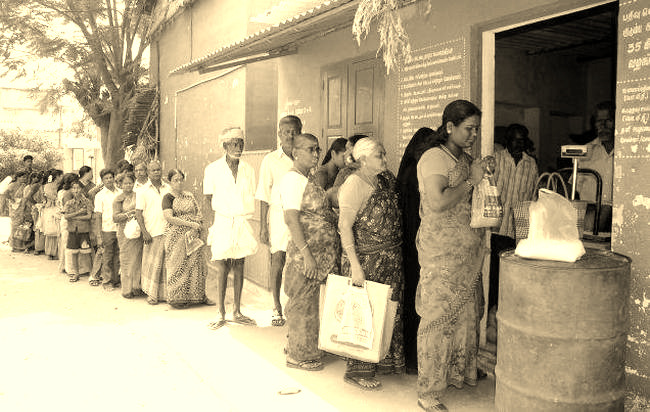
2. The serpentine ration queue: Buying of grains wasn't as easy as going to the grocery store downstairs or even simpler- opening your grocery app and placing the order. The ration market always had long queues to wait before you could get your quintal. The wheat, they say, wasn't as we see today, but red in colour and something like ‘Gahu (American) 1 Re kilo’ written on the price plate at the store.
Rice- which is a weakness to most wasn't a daily affair in most places in Maharashtra. It was a delicacy prepared only on festivals!
Green revolution was still underway and there wasn't surplus produce; but was organic!
PC: Google images (Pics for ref. only)

3. Exclusive foods: Dry fruits, almonds and jam and even apples were not common. A jam bottle (not readily available in markets then) was coveted and eaten with care so as not to finish early. Mangoes were a heaven's paradise (this hasn’t changed much) and they were careful not to leave any bit of the pulp from the peel. 
They fondly remembered their ‘first time encounters’ with these exclusives.

4. Making their own toys: Balls didn't come ready made. They were crafted with love and care, consolidating pieces of tyre rubber and scrap; grooming some artistic skills and craftsmanship you know! And losing this piece of toy was heartbreaking!

PC: Google images
5. Playing 'real': Play stations, mobile games or the latest fidget spinner- children were ‘happily’ oblivious of these. Children back then didn't depend on digital aids or technological gizmos for entertainment or engagement. They played games in the ‘real’ and not virtual world. It was as simple as stepping out of the house in the open playground and then there was lagori, gilli danda and marbles.
PC: Google images
6. Cycling: This was a luxury and often meant borrowing and sharing of bicycles among peers. It would have been a sight when girls tried their brother’s cycle (don't get the purpose of the rod) and managed to paddle with a tilt! 
PC: Google images

7. Playing in the mud: Parents today would get palpitations at this thought! Making forts in monsoon with one’s own architecture and moulding the clay with own hands would have been a delightful exercise; certainly more than bringing the ready-made ones on Diwali.
PC: Google images
8. Sharing: This was ‘practical’ and not merely mugging definitions from the moral values book; especially with each one having siblings. There was always everyone’s thought when the pie was divided! Using the clothes and textbooks of the elder brothers and sisters was an unsaid rule. The elder one was lucky here, while the youngest chap getting the (second hand raised to no. of elder sibling times) passed on material. :D
PC: Google images
9. Lifestyle and surroundings: There was no-motor obsession! With no mobile, people were ‘mobile’! They walked everywhere and anywhere, for miles, effortlessly. It didn’t require treadmills to complete our workout quota. Students walked to school and came back home for lunch. There was no television, screens to glare at. Thus, there was ample time, life was hassle free. The air was fresher. Pune was known as a ‘non-fan station’! So there were no ACs, no gyms and less medical stores!


10. Celebrations: It was an elaborate affair. Festivals were celebrated in real and not merely on WatsApp. But as a witty student once said, “All said and done, we cannot live without technology and no one would like to go back to the 1G era.”


11. The 31st: The month-end time was the most dreadful for most households! That eagerly waiting on 31st of the month for dad to return home with salary was the most awaited occasion! Tensions did exist, not like the ones today, but more basic with what to cook food tomorrow? Will it suffice the family? When compared, I don’t know which are worse. (Thankfully, we live in better times.)

Those times we cannot believe, can only afford to imagine! They have been through it, yet they were happy and content and lived life to the fullest. They had some tough life lessons which made them face challenges head on, unlike today’s overtly pampered kids. Sanitised hands and low immunity!

They found happiness! Childhood was a memorable time for them. Some were good experiences, while ​some they never want again. But this is life- of bitter and sweet experiences. And who knows, we too would tell our younger ones, “During our times…”
It is to move on with lessons, thanking God for the good things and hoping for a bright future. It is to find happiness between Kal, aj aur kal!